
A company is awarded a significant contract. The production requirement for each month increases however the facility isn’t equipped with more space and has employees with previous experience or additional hours during the daytime. A second shift may help temporarily, but it could create new labor as well as training, supervision and quality-control requirements.
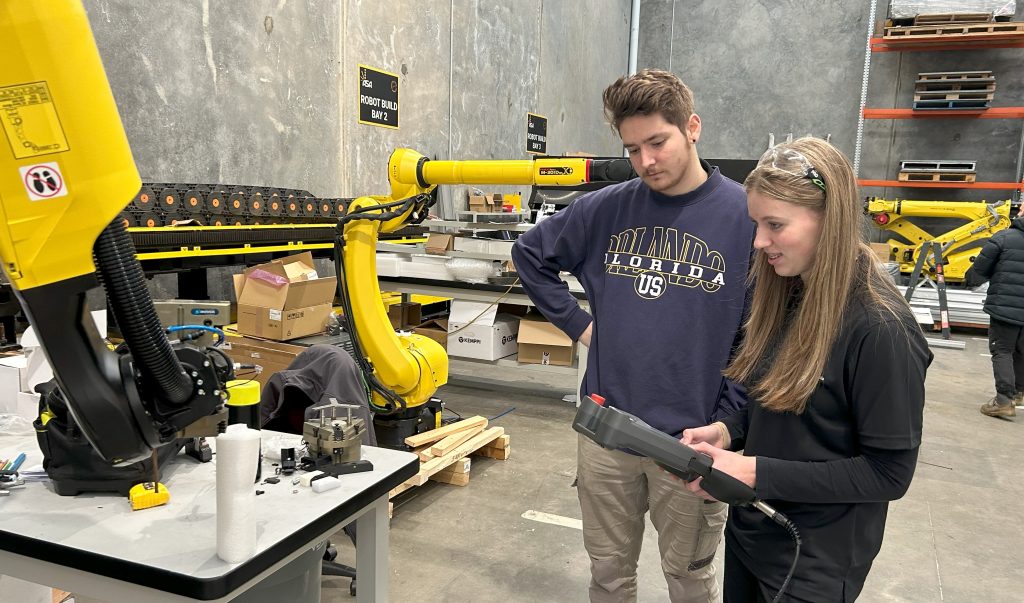
Image credit: automatedsolutions.com.au
These situations reveal a very important reason for robotic automation. Robotics goes beyond replacing people with machines. If it is used correctly it can transform the way producers use the capacity they already have.
Check out the time that passes between products
Inefficiency in manufacturing doesn’t have to be significant. Imagine a worker taking 15 seconds looking for a particular component and then 10 seconds putting it into the material and then moving it. The time difference could seem minor for a single component. When repeated thousands of times however, these seconds can increase production by a significant amount.
It’s the same for waste material. Similar is the case for the waste material.
Before making a decision on the equipment they will require, companies looking at robotic automation Australia can gain from analysing these tiny losses. ASA’s analysis of requirements is designed to pinpoint bottlenecks and quality issues, as in addition to the waste that can be a problem in a project.
The robot should fit the procedure around it.
Robots are just one of many engineering decisions. Controls, guardings and tooling sensors, conveyors and fixtures could also be required. Engineers should think about the range, payload, and how the robot will operate and interact with the surrounding.
ASA offers conceptual development, system design, CAD simulation and offline programming as part of its plan to FANUC’s robotic automation. Digital simulation lets engineers analyze configurations, estimate cycles times and test the system before it becomes operating on the floor of a customer’s premises. It’s especially useful when there is a limited space available or when the new robotics has to integrate with the production line.
Dispensing and Paint Shows Why Replicability is Important
Certain manufacturing processes demonstrate the importance of controlled movements. Imagine coating hundreds or even thousands of parts. Making components faster is the desired outcome. The distance, movement, rate, and even the application needs to be monitored at the beginning of the production line until the final.
ASA is a team of experts working on dispensing and paint applications across industries, including aeronautics and automotive. In these environments, industrial robotic automation can provide repeatable programmed movement while also reducing employee exposure to physically demanding or potentially hazardous processes.
The elimination of waste and the improvement of productivity can be accomplished through better control.
The installation of the system isn’t enough. It is still necessary to have people to take care of it.
Automating doesn’t completely eliminate the need for manufacturing knowledge. Automation transforms the skills required for maintaining and operating the manufacturing process.
Employees must be taught to use equipment safely and to recognize abnormal behavior as well as troubleshoot components that are malfunctioning and take care of any maintenance that is required. The production needs can change in time, meaning that programs and processes will need to be adjusted.
ASA offers training on-site in safe operating, programming, and troubleshooting. It also offers maintenance of electrical and mechanical systems. It also offers servicing and support on a regular basis to assess the condition of the equipment and deal with issues that may arise during the equipment’s operational life.
Capacity goes beyond just getting faster work done
For Australian manufacturers, increasing capacity doesn’t mean purchasing a larger building or continually adding more workers to repetitive processes. The more important question to consider is whether your current manufacturing process can be improved.
ASA has been creating and integrated automation solutions since 2002, supporting manufacturers in Australia as well as projects in other countries. Its approach combines needs analysis as well as engineering simulation. FANUC integration, training and servicing.
Automation isn’t the goal. A system that’s worth the gold it’s worth must provide measurable benefits to a manufacturer, such as greater reliability, higher quality, safer processes and less waste.