
Surface finishing has transformed into a highly precise engineering process. In today’s world of manufacturing coating quality is directly affecting the durability, corrosion resistance and overall perception of the product. As global standards get more strict and clients demand perfect coatings, a lot of facilities are turning to paint robotics to attain greater control and consistency.
Modern paint machines bring a structured motion and programmable precision to applications which previously relied on the operator’s technique. Automating spray paths and angles, as well as speed, removes many of the imperfections that cause uneven film construction or excessive material usage. This results in a consistent coating process that allows for greater First Time Quality and reduced work-over time.
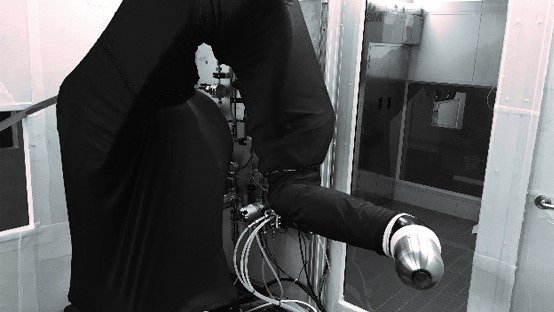
Image credit: automatedsolutions.com.au
Consistency, efficiency and tangible gains
Due to fatigue or small variations in technique, hand painting can lead to variations in coverage and thickness. Paint robots eliminate this variation since they repeat the same motion pattern over and over again throughout the production stage. This type of repetition guarantees an uniform surface finish and an optimal distribution of the material across every component.
A robot-controlled paint system can enhance transfer efficiency. Overspray of paint is decreased when the distance and angle between the applicator’s component’s are kept precisely. Lower material waste directly impacts cost savings, while reduced volatile organic compound emissions support the environmental initiatives.
Paint robotics that incorporates fluid handling ensures precise mixing ratios for coatings made of multiple components. It eliminates inconsistencies, which could compromise the integrity and quality of the finished product. The combination of steady flow control and adjustable parameters allows manufacturers to fine tune the atomisation parameters and spray patterns in real time without interfering with production.
Productivity and safer workplaces
The adoption of a robot painter can bring substantial benefits in terms of improved uptime. Paint robots have a higher efficiency than manual operations because they operate without interruption. Once they are programmed, they can maintain consistent throughput without the need for interruptions or continuous supervision.
It is essential to take into account safety in any facility that employs solvent-based or bi-component coatings. In the case of reactive or explosive materials, atomised paints could create hazardous atmospheres. Modern paint robots are engineered to operate safely in challenging conditions, reducing exposure to hazardous substances and increasing safety standards in the workplace.
Conveyor track technology boosts productivity even more by allowing paint applications by robots as the parts remain in motion. This increases the effectiveness of the working envelope and keeps production lines operating efficiently.
Australian Automation Expertise Supporting Industry
Access to automation partners with experience is vital for those who would like to modernize their finishing operations. In Australia, Automated Solutions has built a strong reputation for delivering advanced robotic integration services. With extensive knowledge in automation engineering, the team works as certified FANUC robot integrators, helping businesses implement tailored robotic paint solutions that align with their operational goals.
Automated Solutions helps manufacturers evaluate their processes and develop robotic paint cells by combining the expertise of industry experts with technical know-how. Through collaboration in scheduling, simulation, as well as system integration, facilities gain an understanding of anticipated improvement in performance prior to installation.
Adopting paint robotics is not simply about automation; it is about measurable improvements in quality performance, efficiency, as well as safety. Paint robotics that are well-engineered transform finishing on surfaces from a lengthy, expensive and unreliable process to an efficient, repeatable process. With the assistance of knowledgeable automation specialists, manufacturers can enhance their competitiveness, and set themselves up for longevity in a complex market.